
Introduction of Lasers for Skin Rejuvenation
Skin rejuvenation encompasses the use of varied technologies to smooth, tighten, even, or otherwise restore epidermal and dermal appearance. Given the prevalence of epidermal and dermal abnormalities in the population, demand for effective and safe skin rejuvenation procedures is high. Fortunately, significant advances in the arena of laser technology have provided effective and diverse options for skin rejuvenation.
Ablative and nonablative lasers are usually used for skin rejuvenation. Ablative lasers are defined by the capacity to produce sufficient thermal damage to create areas of complete tissue ablation or destruction. These lasers have targeted water and include the CO2 (10600nm) and Er:Yag (2940nm) lasers. Nonablative lasers produce limited thermal damage without causing ablation or vaporization of tissue. The popular wavelength includes 1927nm thulium and 1550nm Erbium fiber laser. Some 1440nm/1470nm infrared lasers are also used.
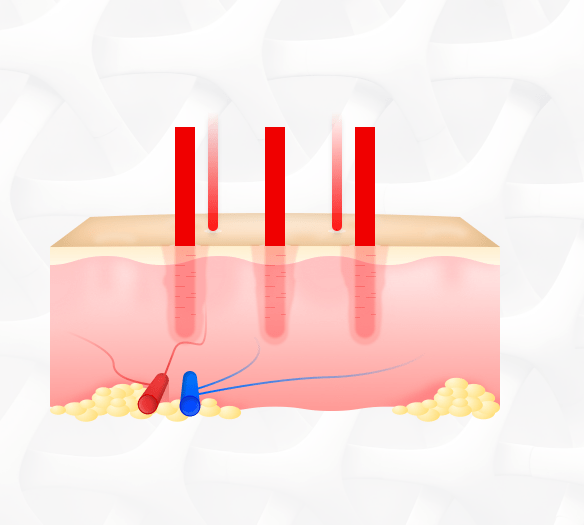
With the concept of fractionated photothermolysis induced, fractional infrared laser irradiation is applied to the skin rejuvenation more and more for the significant reduction of risks and side effects.